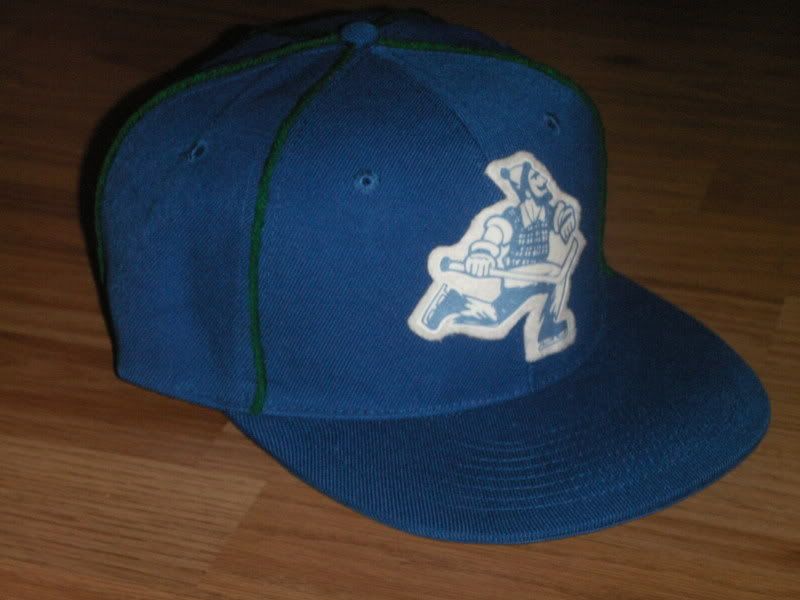
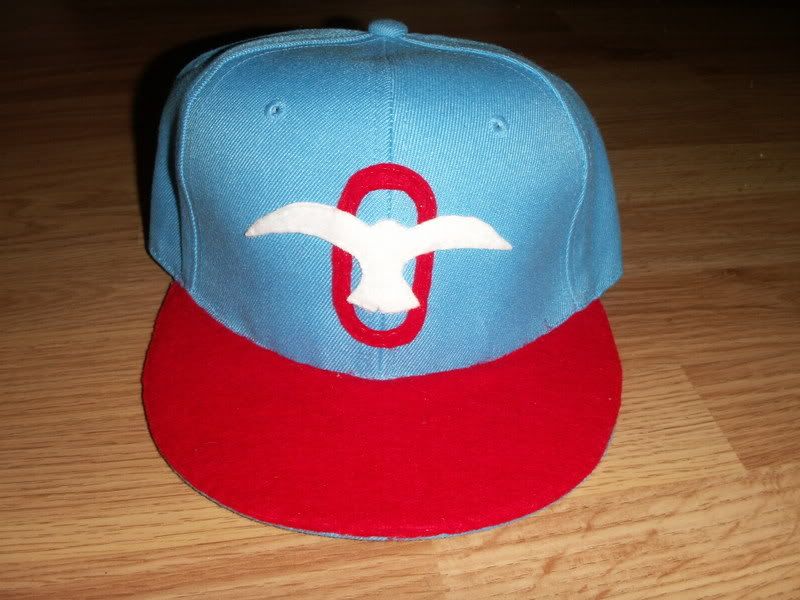
The Vancouver Canucks were a team in the minor professional Pacific Coast Hockey League and the Western Hockey League. The Canucks were founded in 1945, and left the league in 1970 to join the National Hockey League, along with fellow expansion team the Buffalo Sabres.
The logo is from the 1964 season of Canadian Hero Johnny Canuck.
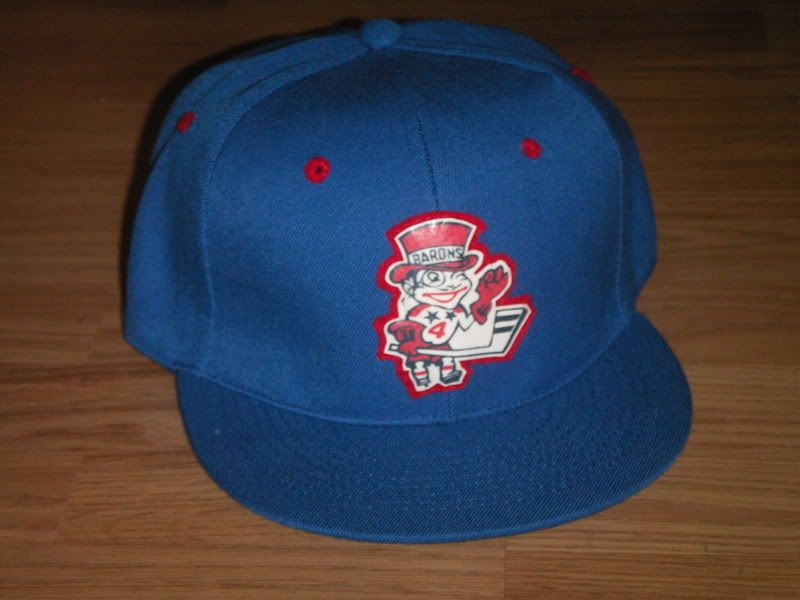
The Marion Barons were a minor league professional ice hockey team in the International Hockey League during the 1953-54 season. The Barons were based in Marion, Ohio, played at Veterans Memorial Coliseum, and were a farm team of the Cleveland Barons. The Barons placed second in the league their only season, and featured four players who reached the National Hockey League; Armand Delmonte, Ott Heller, Johnny Ingoldsby and Tony Poeta.
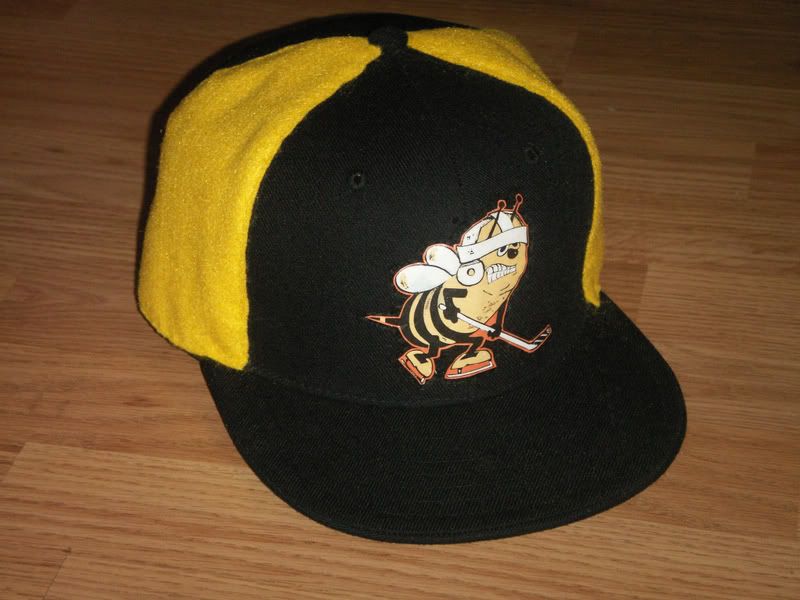
The Toledo Hornets were the International Hockey League franchise of Toledo, Ohio from 1970 to 1974. Prior to 1970, the team was known as the Toledo Blades (1963-1970). Following the 1973-74 season, the team name was changed to the Goaldiggers. The franchise moved to Kansas City, Missouri after the 1985-86 season.
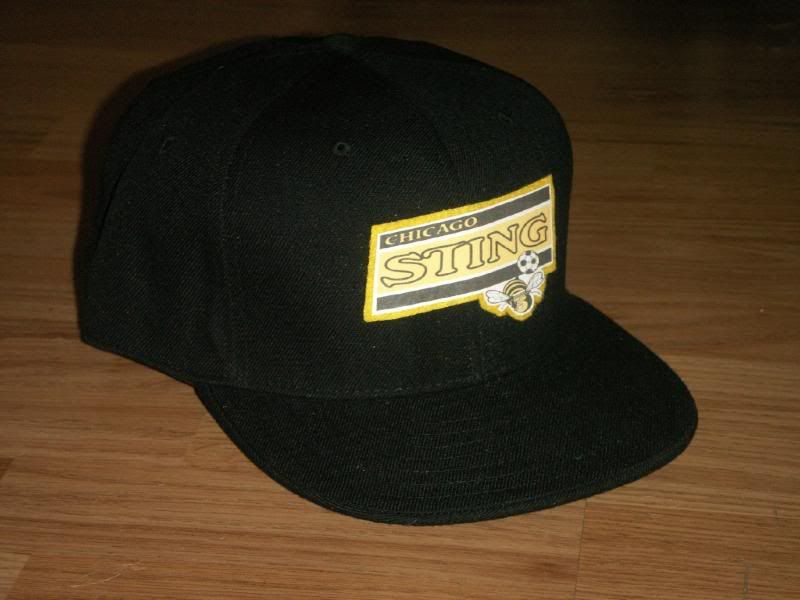
The Chicago Sting (1975-1988) was an American professional soccer team based in Chicago, Illinois. The Sting played in the North American Soccer League from 1975 to 1984 and in the Major Indoor Soccer League from 1984 to 1988. They won the Soccer Bowl in 1981 and 1984. The best player in Sting's history was German Karl-Heinz Granitza, who played for the club from 1978 to 1988. The Sting were founded in 1975 by Lee Stern of Chicago. A few years after founding the Sting, Stern brought Willy Roy on as head coach. Roy coached the Sting for the remainder of their outdoor existence. The team was named in reference to the popular 1973 film, The Sting, whose action was set in Chicago of the 1930s. The club played at various venues. The outdoor team spread their games around Soldier Field, Wrigley Field and Comiskey Park during their 10 years of operation. The indoor entry called both Chicago Stadium and the Rosemont Horizon (now the Allstate Arena) home.
Here's an old video of the Sting vs. NY Cosmos in a shootout. Enjoy.
The New York Cosmos (1971–1985), known simply as the Cosmos for the 1977 and 1978 seasons, was a soccer franchise based in New York City and its suburbs that operated in the North American Soccer League from 1971 to 1984. Founded by brothers Ahmet and Nesuhi Ertegün as well as Warner Bros. President Steve Ross, it was one of the stronger NASL franchises, both athletically and financially. It became known around the world for signing the great Brazilian player Pelé who, though past his prime, was nonetheless one of the team's, and the league's, top gate draws during his tenure with the Cosmos. The NASL folded after the 1984 season, but the Cosmos attempted to operate as an independent team in 1985 before it ceased activity too.
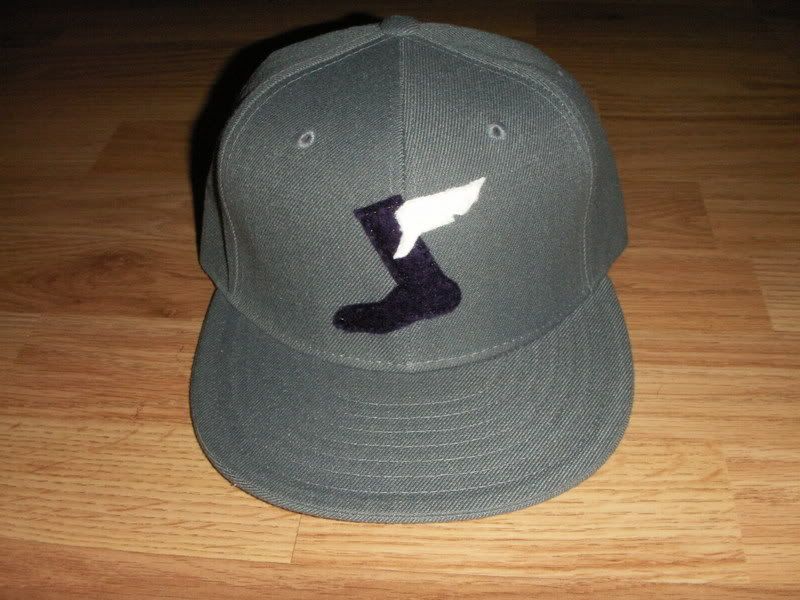
For a time, from 1911 to 1933, the Washington Senators were one of the more successful franchises in major-league baseball. The team's rosters included Hall of Famers Goose Goslin, Sam Rice, Joe Cronin, Bucky Harris, Heinie Manush and one of the greatest pitchers of all time, Walter Johnson. But the Senators are remembered more for their many years of mediocrity including six last-place finishes in the 1940s and 1950s.
The Chicago Cougars were an original franchise in the World Hockey Association from 1972 to 1975. The Cougars played their home games in the dilapidated International Amphitheatre.
They were placed in the Western Division for their first season (1972-73) and transferred to the Eastern Division for their final two seasons (1973-74 and 1974-75).
They're O.G. colors were gold and green watch out for that one.
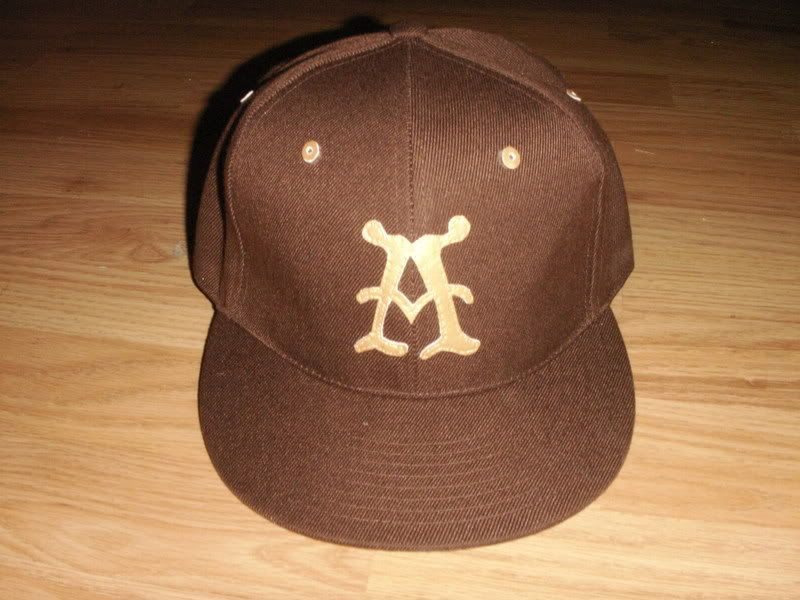
Seattle would be known as the Siwashes until they dropped out of the Coast League after the earthquake season of 1906. They were, at one point, called the Indians. When the team returned to the league in 1919, management tried to call the team the Purple Sox, but had to change the name back to Indians when fans rebelled. During the 20s the team was occasionally called the Rainiers, even though the name was not changed officially to that when Emil Sick bought the club in the 30s.
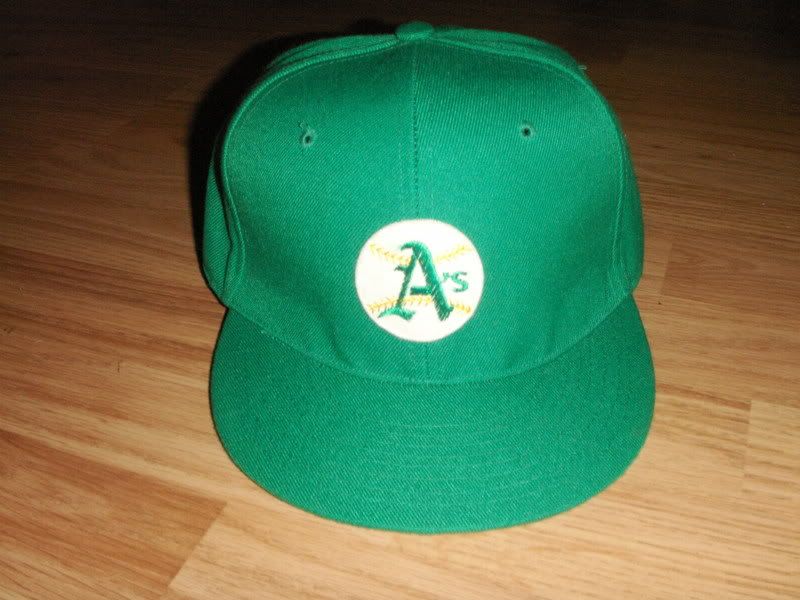
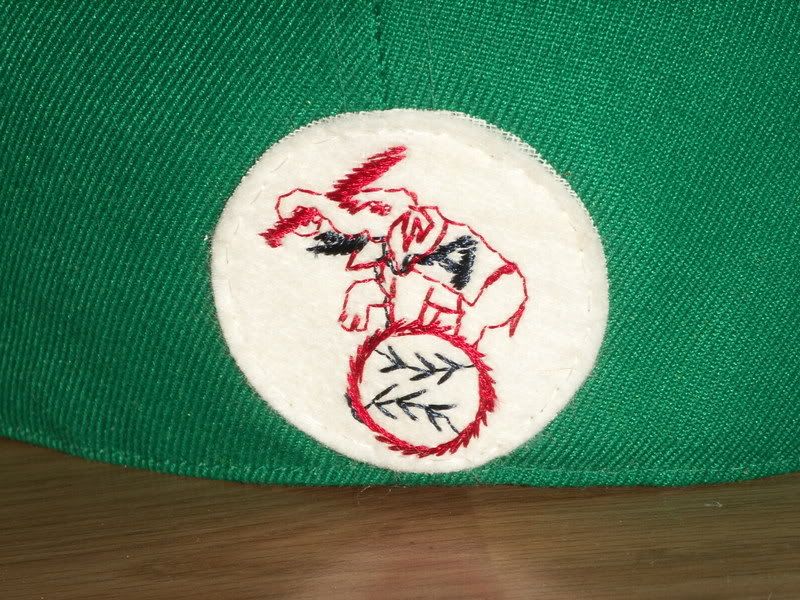
For you who didn't know the A's played in KC before they trucked over to Oakland. This custom has a vintage 60's patch on the front and 50's vintage patch on the back of the white elephant in the team's old colorway. Good looking cap.
In 1955 Philadelphia Athletics decided to make Kansas City their new home. When the A's finally made their home debut 32,844 excited fans turned out to watch them beat the Detroit Tigers 8-2. There was not much winning that first year, as the Athletics finished in 6th place with a 63-91 record.
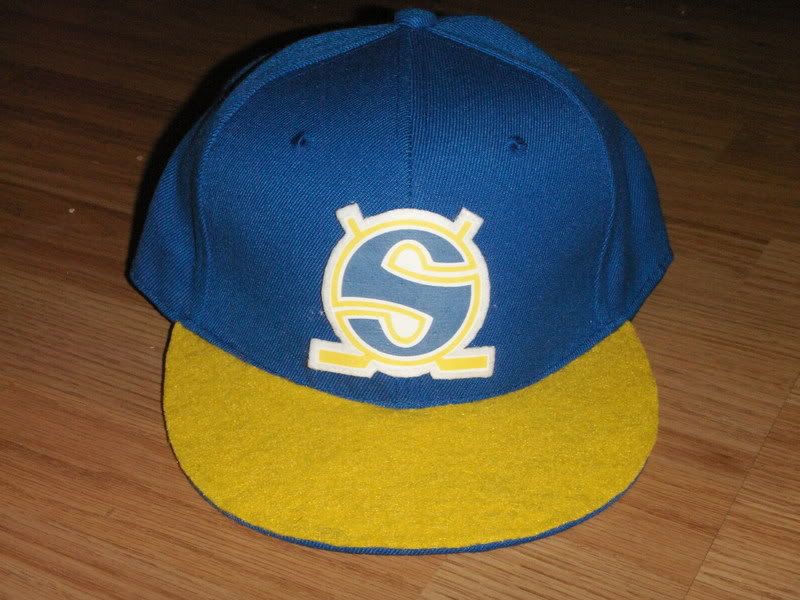
The first team was one of the WHA's original twelve franchises. They played four seasons, beginning in the inaugural 1972-73 season. The Fighting Saints' first game was played Friday, Oct. 13, 1972, at the St. Paul Auditorium, best remembered for its unique clear plexiglas boards. The Saints lost 4-3 to the Winnipeg Jets. Partway through their first season, the new St. Paul Civic Center opened in January 1973. Their first game in the new arena was Jan. 1, 1973, a 4-4 overtime tie with the Houston Aeros.
The team colors were royal blue, white and new gold. The name was taken from the St. Paul Saints of the Central Hockey League, who had used the nickname "The Fighting Saints" in promotional material.
The Halifax Diamonds were a baseball team that played hockey during the off-season in the Coloured Hockey League. Here is the 1921 roster.
Halifax Diamonds 1921 Provincial Baseball Colored Champions 1921 Charles Adams - Sub Nat Henry Bunyon -Point Ralph Collins -Center Al DeLeon - Wing C. Gibson - Goal William T. "Pop Corn" Lambert George Richardson - Sub Joe Taylor - Cover Point John "Jack" Turner - Sub
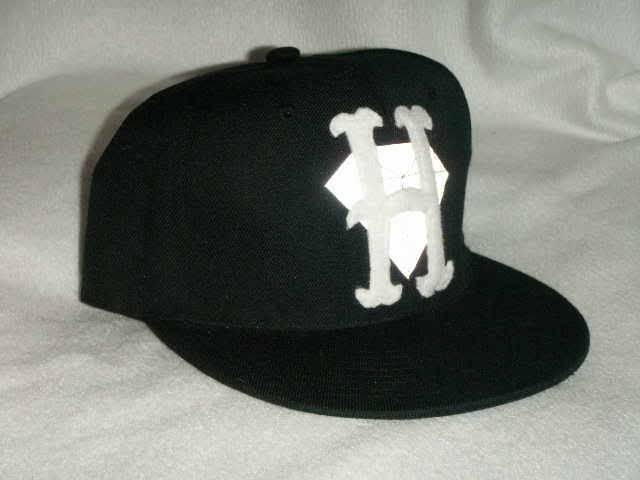
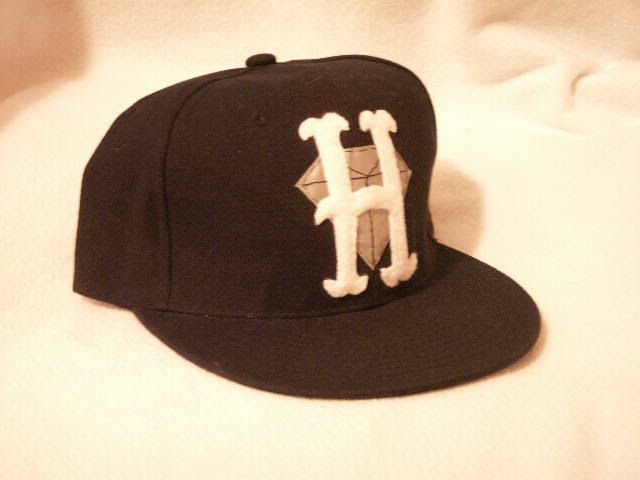
I've included two pictures of the cap. The diamond on the cap is made with 3m reflective fabric so it doesn't photograph well. The second picture was taken with the flash off so you can see some detail.
The Coloured Hockey League was an all-black ice hockey league founded in Nova Scotia in 1894 and featured teams from across Canada's Maritime Provinces. The league operated for several decades lasting until 1930.
With as many as a dozen teams, over 400 African-Canadian players from across Nova Scotia, New Brunswick and Prince Edward Island participated in competition. The Coloured Hockey League is credited by some as being the first league to allow the goaltender to leave their feet to cover a puck in 1900. This practice was not permitted elsewhere until the formation of the National Hockey League in 1917. Hockey historian George Fosty also claims that the first player to use the slapshot was Eddie Martin of the Halifax Eurekas 100 years ago.
This cap represents the Africville Seasides. I've included a video based on the league and the team's 1901 championship roster.
Africville Seasides 1901 Co -1901 Colored League Champions James Carvery -Forward/Center/Goal John Cassiday -Point /Defense/Goal Richard "Dick" Carvery - Forward/Right Wing William Carvery, Sr. -Goal Allen Dixon -Forward/Point/Rover James E. Dixon - Goal/Forward/Point/Left Wing Wallace Dixon -Forward/Cover Point Richard "Dick" Dixon -Sub/Forward William G. Howe, Jr. -Team Executive A. Edward "Eddie" Martin -Cover Point (Joined team after starting season on Eurekas) T.G. MacDonald -Treasurer and Manage
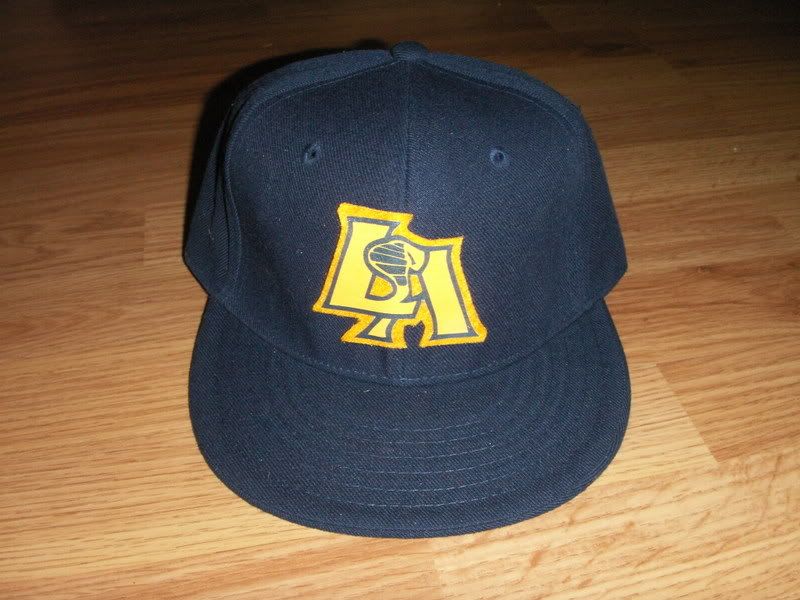
The Los Angeles Cobras played in the 1988 Arena Football League season only. They played their home games at the Los Angeles Sports Arena, which they shared with the Los Angeles Clippers of the National Basketball Association. The team's logo was unusual in that it consisted of an interlocking "LA" in which the left upright of the "A" was formed by the hooded head and "neck" of a cobra.
The Cobras, who featured former NFL all-pro receiver Cliff Branch, managed only a 5-6-1 record and drew dismal crowds. They did manage to grab the fourth and final playoff spot in the six team AFL, but lost in the semifinals to the Chicago Bruisers. It turned out to be their last game ever as the Cobras (as well as the New York Knights and the New England Steamrollers) folded after the 1988 season, cutting the league down to just three teams.
The Cobras are also featured in the film Kinjite: Forbidden Subjects starring Charles Bronson. One scene takes place during a Cobras/Bruisers game, presumably the final regular season contest played July 14, 1988 (this game also had the distinction of ending 37-37, making it the first tie game in arena football history). The film was released in early 1989.
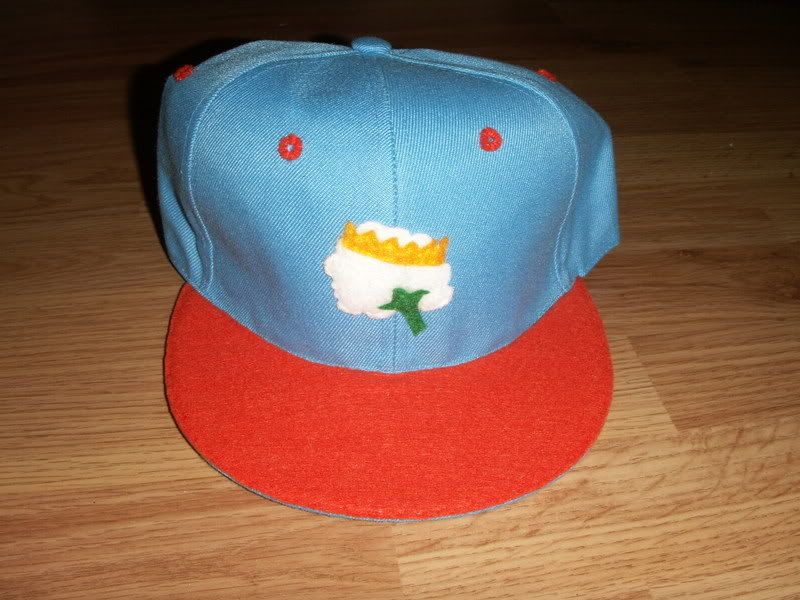
The Cotton Kings played semi-pro ball in Casa Grande,Arizonia. In the 1954 National Baseball Congress World Series the Cotton Kings lost to the Wichita (KS) Boeing Bombers. However, their star pitcher, Donnie Lee walked away with MVP honors.
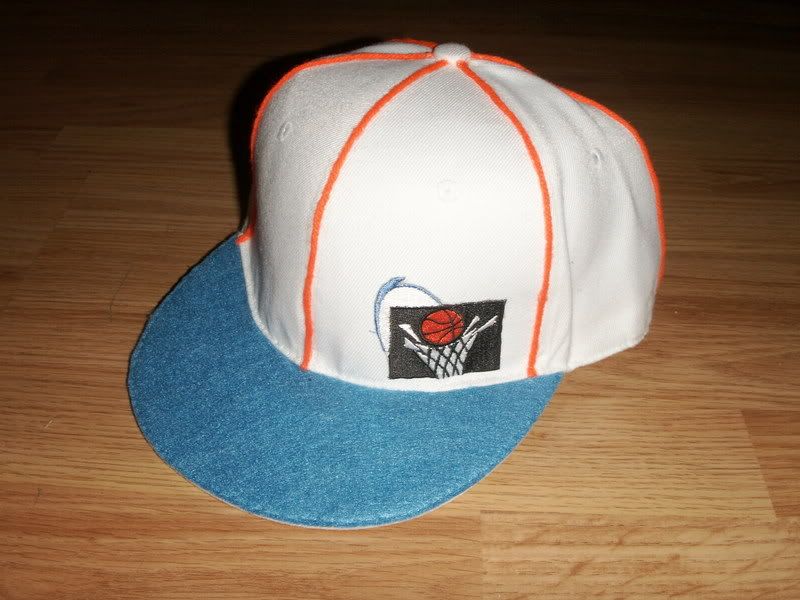
With the retirements and departures of Nance, Daugherty and Price, the team lost much of its dominance and were no longer able to contest strongly during the playoffs. After the 1992-93 season, in which the Cavs boasted a 54–28 regular-season record but suffered an early exit from the playoffs, Wilkens left to coach the Atlanta Hawks.
Following the hiring of Mike Fratello as head coach starting with the 1993-94 season, the Cavs became one of the NBA's best defensive teams under the leadership of point guard Terrell Brandon. But the offense, which was a half-court, "slow-down" tempo installed by Fratello, met with mixed success. Although the Cavaliers made regular playoff appearances, they were unable to advance beyond the first round.
In 1994, the Cavs moved back to downtown Cleveland with the opening of the 20,562-seat, state-of-the-art, Gund Arena. Known by locals as "the Gund", the venue also served as the site of the 1997 NBA All-Star Game.
Later on, players like Shawn Kemp and Žydrūnas Ilgauskas added quality to the team, but without further success. Fratello was fired following the shortened 1998-99 season.
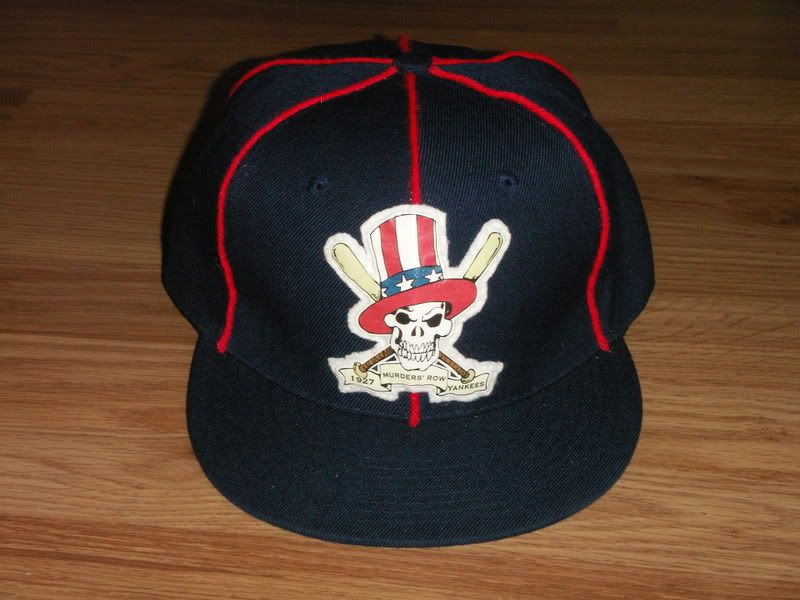
Murderers’ Row, was the nickname given to the New York Yankees baseball team of the late 1920s, in particular the first six hitters in the 1927 team lineup.